Pages

Tuesday, 23 April 2013

Week 10 (Reflection) 17 April 2013

     In this week, we continue our learning on the cataloging topic. Summary regarding the LCC and DDC were being given by Mr. Abd Razak. We were being asked to pass up the critical writing with the topic as stated below:


Kenapa DDC digunakan di perpustakaan sekolah rendah manakala

 LCC digunakan di perpustakaan university ?

Buku-buku di perpustakaan dikelas dan dikatalogkan dengan tujuan untuk memudahkan pengguna perpustakaan mencari dan menggunakan buku-buku secara mudah. Jika dalam keadaan di mana jumlah buku adalah sikit, pengguna-pengguna buku boleh mencarinya terus di perpustakaan. Tetapi, jika bilangan buku semakin bertambah banyak, jika pengkelasan dan pengkatalogan buku tidak diadakan, ia akan menyusahkan pengguna untuk mencari buku yang berkenaan. Perkhidmatan yang cekap dapat disediakan kepada pengguna dengan adanya sistem pengelasan dan pengkatalogan ini.

Koleksi-koleksi di Perpustakaan Dato’ Jaafar Hassan menggunakan dua sistem pengkelasan nombor buku iaitu: Library of Congress Classification (LCC) yang menggunakan abjad A hingga Z; Dewey Decimal Classification (DDC) yang bermula dengan angka 000 hingga 999.

       Dari segi saiz, LCC adalah lebih besar dari segi kelas, di mana kelasnya adalah lebih luas dengan subkategori yang lebih kecil. Walaupun subkelas LCC adalah lebih kecil tetapi ia adalah lebih khusus. Dalam sistem pengkelasan DDC, 10 kelas subjek telah dipecahkan kepada 10 bahagian yang kemudiannya dipecahkan kepada 10 subdivisi.

       Manakala dari segi struktur, LCC mempunyai kelas yang terus berkembang dan dikemaskini secara bebas oleh pakar-pakar dalam bidang yang berkaitan. Manakala DDC mempunyai prinsip-prinsip yang menyeluruh dengan pembahagian perpuluhan dan catatan mnemonik dari segi struktur.

       Dari indeks relatif, DDC dapat membawa semua topik bersama-sama, manakala LCC tidak boleh membawa semua topik bersama-sama. DDC boleh dibahagikan secara konsisten dengan menggunakan kategori dan sub-klasifikasi manakala LCC tidak dibahagikan secara konsisten. Kelebihan ini telah menyebabkan DDC digunakan secara meluas di perpustakaan awam dan perpustakaan sekolah, manakala LCC digunakan di kolej dan universiti.

       Sistem pengkelasan Dewey tidak dapat membahagikan bahan-bahan bagi subjek-subjek baru. Kekangan lain ialah nombor panggilan yang panjang dan sistem perpuluhan Dewey yang menyebabkan kerumitan atau kesusahan dalam mengenalpasti sumber di perpustakaan. Bagi sistem pengkelasan LCC pula, penciptaannya adalah berdasarkan perpustakaan tunggal dan sistem surat-nombor pengenalan adalah susah.

Akhirnya, DDC adalah lebih sesuai untuk digunakan di sekolah rendah, manakala LCC adalah lebih sesuai digunakan di perpustakaan akademik universiti.


Bahan rujukan:


     After that, he also asked us to do cataloging for the preparation of database. Below is the homework that had been done by me during the hands-on activity doing the cataloging in the thesis resource centre.

19)
005.133        Larry, Long
  LAR                    Pengaturcaraan basic / Larry Long ; Penterjemah Subariah Ibrahim. - Skudai:
                     UTM, 1998.

                              xii, 164p. : ill. ; 25cm.

                              mengandungi indeks.

                              ISBN 983-52-0114-5

                              1. BASIC (Computer program language)               I. Subariah Ibrahim             
                              II. Judul


20)
302.545       A Razak Bin A Karim
  ABD                   Isolasi (Pengasingan Diri) dalam kalangan pengetua sekolah menengah negeri
                    Johor / A Razak Bin A Karim .- Skudai : UTM, 2012. [Tesis tidak diterbitkan].

                              xvi, 119p. : ill. ; 30cm.

                              mengandungi bibilografi

                              Tesis Sarjana Pendidikan (Pengurusan dan Pentadbiran).

                              1. Alienation                                   I. Judul


21)
                    Chen, Kean Fah.
                              Penglibatan dalam tuisyen swasta dalam kalangan pelajar sekolah SJKC daerah
                    Kulaijaya / Chen, Kean Fah - Skudai, Johor : UTM, 2012. [Tesis tidak diterbitkan].

                              xix, 128p. : ill. ; 30cm.

                              mengandungi bibliografi

                              Tesis Sarjana Pendidikan (Pengurusan dan Pentadbiran).

                              1.                                                     I. Judul


Week 9 (Reflection) 10 April 2013

Semester break

Wednesday, 17 April 2013

Week 8 (Reflection) 3 April 2013

       This week we were being exposed with the DDC number building. The fraction of the potential DDC numbers are included in the schedules and it is necessary to build a number that is not specifically listed in the schedule. The four sources of notation for building numbers are as follow:
        (a) Table 1 Standard Subdivisions;
        (b) Tables 2-6;
        (c) Other parts of the schedules; and
        (d) add tables in the schedules.

      Table 1: Standard subdivisions.
       *  -01 Philosophy and theory
       *  -02 Compends / Miscellany
       *  -03 Dictionaries / Encyclopedia
       *  -04 Essays
       *  -05 Periodicals
       *  -06 Societies
       *  -07 Study and teaching
       *  -08 Polygraphy, collections
       *  -09 History

      Table 2: Geographic areas, Historical periods, Persons.
       *  -1 Areas, regions, places in general: ocean and seas,
       *  -2 Persons
       *  -3 Ancient World
       *  -4 Europe
       *  -5 Asia
       *  -6 Africa
       *  -7 North America
       *  -8 South America
       *  -9 Australia, Pacific, polar regions

      Table 3: Ethnic and language
       *  -1 North Americans or USA English or Indo-European
       *  -2 British or English
       *  -3 Germanic
       *  -4 French
       *  -5 Italian
       *  -6 Spanish and Portuguese
       *  -7 Ancient Roman or Slavic
       *  -8 Greek or Scandinavian
       *  -9 Others

       Table 3: Form divisions
       *  -1 Poetry
       *  -2 Drama
       *  -3 Fiction
       *  -4 Essays
       *  -5 Speeches
       *  -6 Letters
       *  -7 Humor
       *  -8 Miscellany

       Table 4: Language divisions
       *  - 1 Writing
       *  - 2 Etymology
       *  - 3 Dictionaries
       *  - 5 Grammar
       *  - 6 Prosody
       *  - 7 Nonstandard forms of the language
       *  - 8 Usage

       Table 5: Ethnic and National Groups
       *  -05 Persons of mixed ancestry with ethnic origins from more than one continent  
       *  -09 Europeans and people of European descent
       *  -1 North Americans
       *  -2 British, English, Anglo-Saxons
       *  -3 Germanic peoples
       *  -4 Modern Latin peoples

       Table 6: Languages
       *  -1 Indo-European languages
       *  -2 English and Old English (Anglo-Saxon)
       *  -3 Germanic languages
       *  -4 Romance languages


Wednesday, 27 March 2013

Week 7 (Reflection) 27 March 2013

          Library classification is the basic principle of library classification of the group items on the shelves according to broad fields of knowledge and specific subjects within each field, so users can find the items more easier.

          The aims of Library Classification are as follow:
          (a)  To arrange the field of knowledge.
          (b)  Bring items that are related to be together.
          (c)  To provide an orderly access on the shelves.
          (d)  To provide an exact location for item on the shelves.


          Type of classification learn by today is hierarchical classification e.g DDC, LCC. DDC is stand for Dewey Decimal Classification and LCC is stand for Library of Congress Classification. Through the hierarchical classification , the subject is being divide into the most general to the most specific. This help to organise whole world knowledge into a hierarchy of subject, such an example, the DDC divided knowledge into ten main classes and each classes is subdivided into narrower subjects.
          The ten main classes are:
           1. 000 Computers, information & general reference.
           2. 100 Philosophy & psychology.
           3. 200 Religion
           4. 300 Social sciences
           5. 400 Language
           6. 500 Science
           7. 600 Technology
           8. 700 Arts & recreation
           9. 800 Literature
           10. 900 History & geography

          In the DDC, arabic numerals are used to represent each class. The second digit is use to indicate the division. 510 is for mathematics, 520 for astronomy and 530 is for physics. The third digit number indicate the section. 530 is for the general works on physics, 531 for classical mechanics, 532 for fluid mechanics and 533 for gas mechanics.


004.6
MOH
                        Mohd Aizaini Maarof
                                    Komunikasi data / Mohd Aizaini Maarof. – Skudai, Johor : Universiti Teknologi  
                        Malaysia, 2003.


                                    Xi, 260p. : ill. ; 26cm.


                                    ISBN 983 – 52 – 0298 – 2


                                   1. Data transmission systems.          2. Computer Networks.
                                I. Abdul Hanan Abdullah                   II. Title.


621.4021
MOH
                        Mohd. Kamal Ariffin
                                     Termodinamik asas / Mohd. Kamal Ariffin. – Skudai, Johor : Universiti  
                        Teknologi Malaysia, 2005.

                                      xv, 277p. : ill. ; 26cm.

                                      ISBN 983 – 52 – 0392 – x

                                     1.Thermodynamics.                      I. Title


622
ARC

                        Archer , J.S.

                                 Kejuruteraan petroleum : Prinsip dan amalan / J.S. Archer ; C.G. Wall ; penterjemah   
                        Ahmad Kamal Idris. – Skudai, Johor :  Universiti Teknologi Malaysia, 2010.

                                 Viii, 379p. : ill. ; 26cm.

                                 ISBN 983 - 52 - 0091
                                 1. Petroleum engineering                          I. Wall , C.G.                    II. Ahmad Kamal Idris                                  II. Title 


696.12
HAL
                         Hall, F. (Fred)
                                     Kerja paip : pembekalan air sejuk, saliran dan pembersihan / F. Hall ; penterjemah   
                         Jamadi Yasin. - Skudai, Johor : Universiti Teknologi Malaysia, 1999.

                                      Xiii, 180p. : ill. ; 24cm.

                                      ISBN 983 – 52 – 0167 – 6

                                     1. Plumbing                       2. Sanitary engineering                     I. Jamadi Yasin 
                                     II. Title.


005.13
ZAL
                         Zalmiyah Zakaria
                                     Pengenalan Pengaturcaraan LISP / Zalmiyah Zakaria. – Skudai, Johor :  
                         Universiti Teknologi Malaysia, 2006.

                                      X, 173p. : ill. ; 24cm.

                                      ISBN 983 – 52 – 0394 – 6

                                     1. LISP (Computer programe Language).             I . Title.


363.51
MOH
                      Mohamad Tajuddin Mohamad Rasdi
                                  Housing Crisis : Back to a humanistic agenda / Mohamad Tajuddin Mohamad
                        Rasdi. – Skudai, Johor : Universiti Teknologi Malaysia, 2007.

       Viii, 111p. : ill, ; 24cm.

       ISBN 978 – 983 – 52 – 0422 – 7

       1. Housing – Malaysia          2. Housing policy – Malaysia.                 I. Title.


Wednesday, 20 March 2013

Week 6 (Reflection) 20 March 2013

          In this week, we get to learn about subject cataloging. What is mean by subject cataloging? Subject cataloging is the process of determining subject headings for an item. http://en.wikipedia.org/wiki/Cataloging

          The subject cataloging aims to provide access by subject to all relevant materials and to provide entry at any level of analysis. We get to learn about the vocabulary control term. This term is means by any list of subject headings for the control of terms used in catalog, bibliography or index. In controlled vocabulary there is one term for any one concept. In the controlled vocabulary, the synonymous terms is being identifies and one prefered terms is being selected. Such an example: Capsicum and peppers, we will use the peppers term. As for homonyms, it explicitly identifies the multiple concepts expressed by that word, such as example are : Springs (mechanical devices) and another Springs (water sources).

         We got to learn about the subject analysis where the first step is to examine the work in hand, then decide on several keywords that could represent the subject and finally using the keywords as a starting point, then go to each term in the list to identify appropriate headings. Subject cataloging determining the subject such as title, subtitle, author, forward, preface, introduction, publisher, series, content and index, text and CIP. After the lecturing, we go to the resourse centre to do some hands-on assignement.


Below is the work done by me in the resource centre.


Atkins, Harold N.
          Bahan Jalan Raya, Tanah dan Konkrit / Harold N. Atkins. Penterjemah Wan Mohd. 4th edition - skudai, Johor : Universiti Teknologi Malaysia, 2005.

          X, 423p. : ill. ; 24cm.

          ISBN 983-52-6380-6

          1. Road materials.        2. Soil.                                        I. Osman Che Puan           II. Title.


Mohammad Nazri Mohd. Jaafar
             Penyelesaian masalah dalam dinamik gas / Mohammad Nazri Mohd. Jaafar. - Skudai, Johor : Universiti Teknologi Malaysia, 2001.

             x, 148p. : ill. ; 26cm.

             ISBN 983-52-0221-4

             1. Gas dynamics.                                                                                      I. Title


Herlina Abdul Rahim
             Pengenalan sistem kejuruteraan kawalan / Herlina Abdul Rahim . - Skudai, Johor : Universiti Teknologi Malaysia , 2004.

             x , 128p. : ill. ; 26cm.

             ISBN 983-52-0349-0

             1. Automatic control.                  2. System engineering.                             I. Title. 


Abdul Karim Mirasa
             Design guide for piles using locally produced steel H-Section / Abdul Karim Mirasa. - Skudai, 
             Johor : Universiti Teknologi Malaysia, 2001.

              xi, 343 p.  :  ill. ; 24cm.

              ISBN 983-52-0222-2

              1. Steel . piling                    2. Piling (Civil Engineering)                  I. Title.


Lokman Mohd. Tahir
             Orientasi kepimpinan pengetua sekolah / Mohd. Anuar Abd. Rahman - Skudai, Johor : Universiti Teknologi Malaysia, 2011.
 
              x, 168 p. : ill. ; 23cm.

              ISBN 978 - 983 -52 - 0753 - 2

              1. Leadership                     2. Educational leadership                  I. Title.


Bonds-Raacke, Jennifer
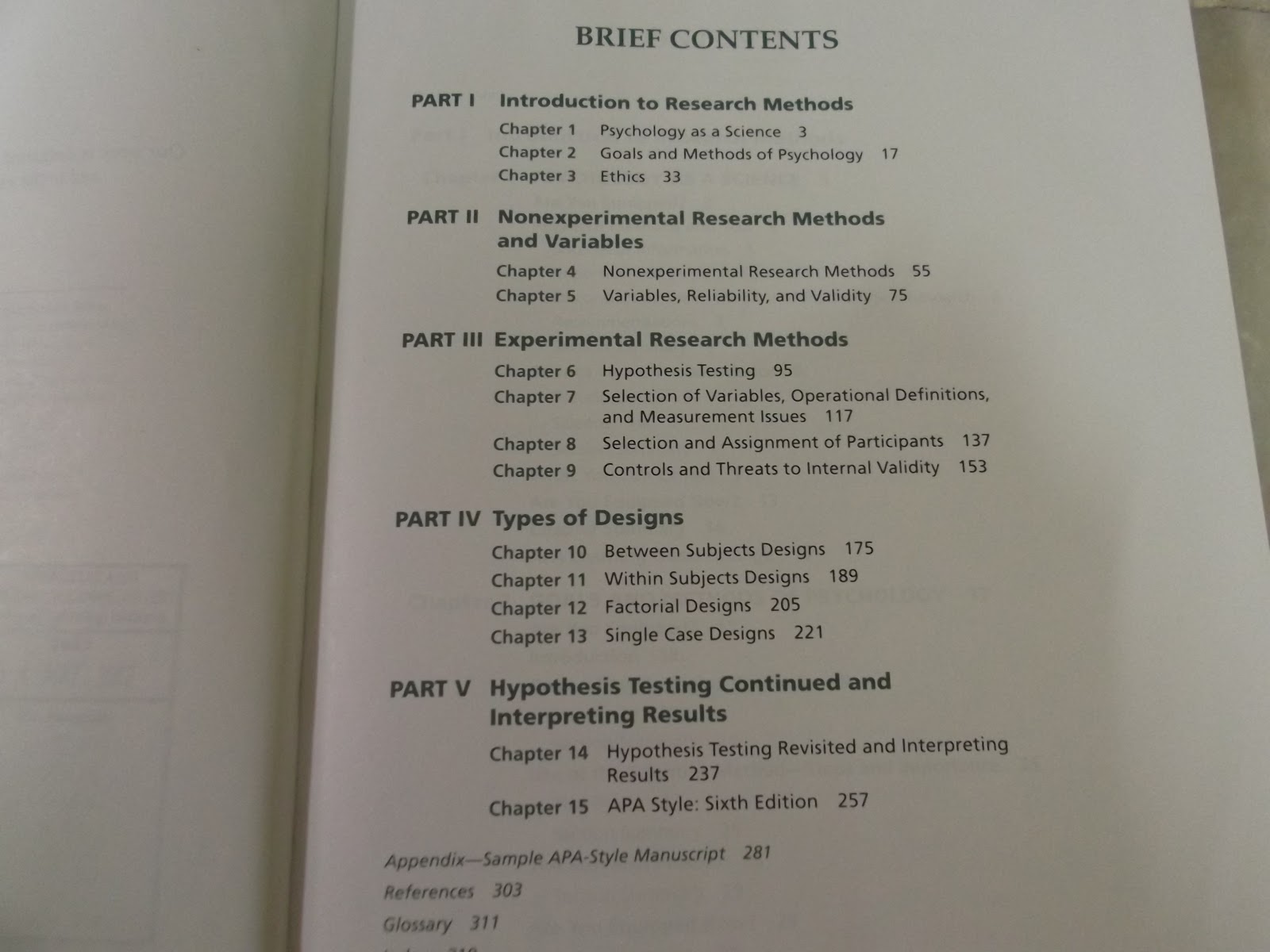
             Research methods are you equipped? / Raacke, John - Prentice Hall, United States of America : Prentice Hall, 2012.

             xxi, 328p. : ill. ; 24cm

             ISBN 978 - 0 -13 - 502268 - 9

             1. Psychology - Research - Methodology.                                       I. Title.


Wright, Daniel B
             First and second steps in statistics / London, Kamala - SAGE publications, Los Angeles : SAGE , 2009.

             xv, 230p. : ill. ; 23cm.

             ISBN : 978 - 1 - 4129 - 1142 - 9

             1. Statistic                                                                                      I. Title.


Another work perform by me for subject cataloging is as follow:


Lever [Compact Disc]. Kuala Lumpur : Bahagian Teknologi Pendidikan, 2003.

           sd., col.
           Pentium, Windows 95 or upper, 16 MB RAM or more, Microsoft video for windows, At least
           640 x 480 display with 65,000 colours, 8 X CD - ROM drive, Sound cards, A modem or
           leased - line to internet.


          1. Lever.


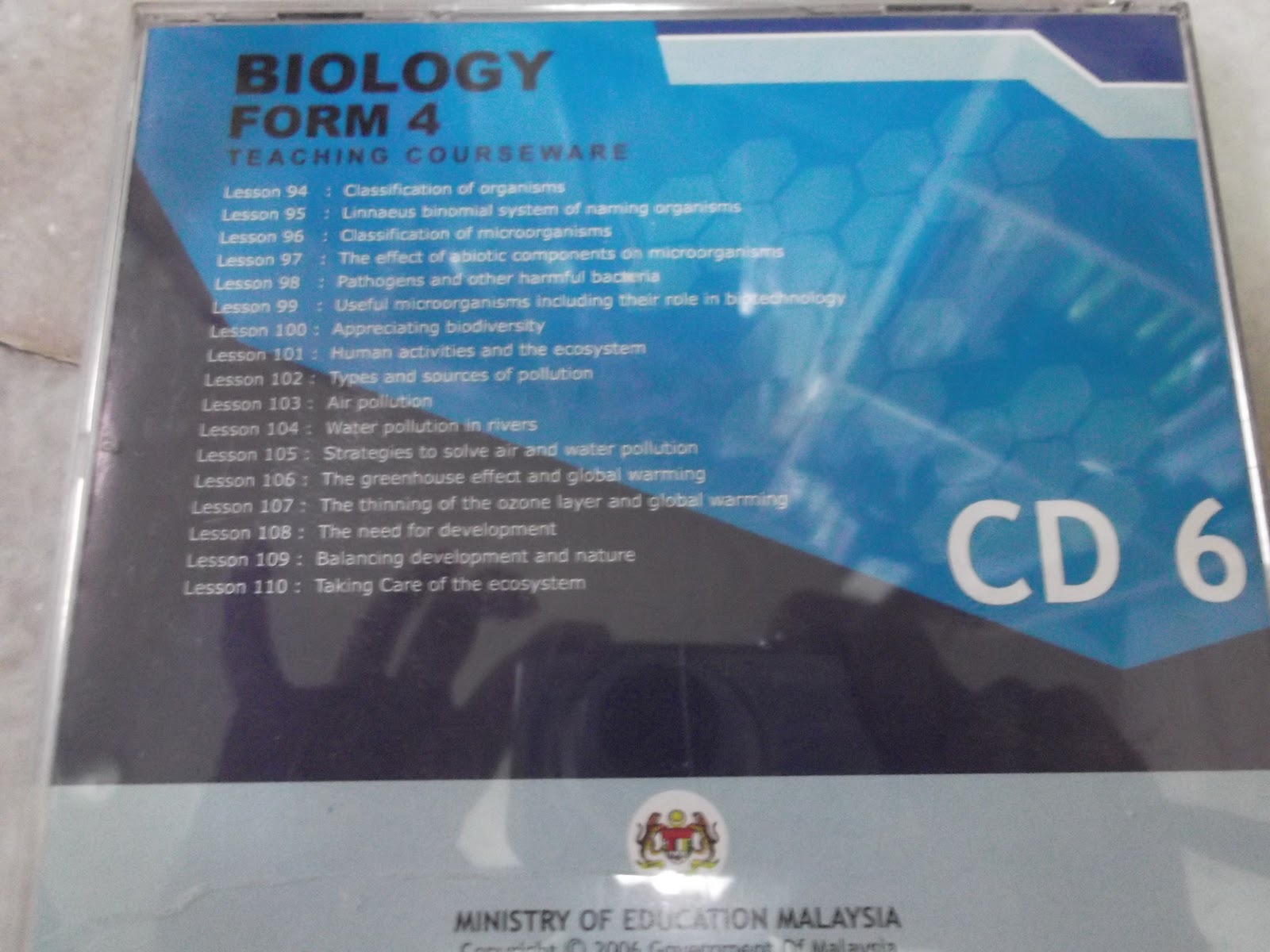
Biology Form 4 [Compact Disc]. Ministry of Education Malaysia : Curriculum Development Centre , 2006.

             sd. , col.
             Win 95 / 98 / XP, Pentium II 500 , 64 MB RAM (128MB recommended), 16 MB Display   
             Card; 24x CD-ROM, Multimedia enabled (Speakers, Microphone).

             1. Biology.


 Biology Form 5 [Compact Disc]. Ministry of Education Malaysia : Curriculum Development Centre, 2007.

            sd. , col.
            Win 95/98/XP, Pentium II 500, 64 MB RAM (128 MB recommended) , 16MB Display   
            Card ;  24 x CD - ROM, Multimedia enabled (Speakers, microphone).  

            1. Biology.


Thursday, 14 March 2013

Week 5 (Reflection) 13 March 2013

          In this week, our lecture ask us to present the hands-on task on the week fourth. On the presentation, we will give the comment to our friends homework and we will do the correction on the homework that we do it wrongly.


          After that we had been given lecture about the serials topic. Definition of serial (AACR2, Glossary) is a publication in any medium issued in successive parts bearing numerical or chronological designations and intended to be continued indefinitely.
          The characteristics of serials that make it different from monographic publications is serials are issued on a continuing basis, often with a regular frequency such as annually or monthly. The title page may not be included in the serials but may be found on the cover or the beginning of the text. This could be found on periodicals like the magazines, journal and newsletters. The designations is present in the serials which is numbers or dates or combinations of both distinguish the individual issues.
          Serials do not have personal authors and serials always associated with editors or compilers. Serials titles are often find in more than a place in the issue and could be in different forms. Serials may also be related to monographs. Supplements, indexes, reprint or special issues could be happened to the serials. Serials its own will be supplement, index, reprint or special issue for others. Serials are issued continuously. The title, issuing body, form of numbering, frequency, size and physical appearance may be change for the serials.
          The common types of serials publications :
                          1) Periodicals
                          2) Annual reports and recurring reports of activities.
                          3) Directories, yearbooks, and other similar reference works.
                          4) Newsletters
                          5) Statistical publications
                          6) Newspapers
                          7) Legal and official publicatios

          The types of serials publications that we are going to learn today are the journal and non book such as the CD-ROM. The example of the serial publications for the journal is shown below :   

British Journal of Educational Technology
Published on behalf of the British Educational Communications and Technology Agency (BECTA)
Edited by:
Nick Rushby
Print ISSN: 0007-1013
Online ISSN: 1467-8535
Frequency: Bi-monthly
Current Volume : 40 / 2009
ISI Journal Citation Reports Ranking: 2008: 31/112 Education & Educational Research
Impact Factor: 1.041


           We also get to learn about the descriptive elements that must be given for all serials :
                          1) Title proper
                          2) Designation of the first issue or a "Description based on" note
                          3) Place of publication or "S.I."
                          4) Name of publisher or "s.n."
                          5) Date of publication when first / last issue is in hand
                          6) Physical description (extent of item)

          Besides that, descriptive elements that may be given depending on what appears, level of cataloging, etc.:
                          1) Other title information
                          2) Parallel titles
                          3) Statement of responsibility
                          4) Subsequent statement of responsibility
                          5) Edition statement
                          6) Place and name of distributor
                          7) Illustration statement and size of publication
                          8) Series statement

          So, the correct way to write the serials for the above journal is as follow:

British journal of educational technology . Vol.1, no.1 (Jan. 1970) -
      London : Education Press, 1970-
      Triannualy
      Library has : vol. 1, no. 1 (Jan. 1970)-
      On microfilm : Mikrofilem 720 : vol.1, no. 1-3 (Jan - Mar 1970):
      Journal of educational technology; vol.2, no.1 (Jan 1971)-vol.5,
      no.3 (Oct 1974)
      ISSN 00071013
      1. Education - Curriculum I. Council for the Educational Technology, London


           After being given lecture in the lecturer room, we then go to the library for hands-on learning. Below is the serial publication for journal that had been done by me.


Journal of fundamental sciences . Vol.1, no.1 (Dec. 2005)-
          Johor : University Technology Malaysia, 2005 -
          Biannually
          Library has : vol.1, no.1 (Dec. 2005)-
          ISSN 1823-626 X
          1. (not yet study)       I. Ibnu Sina for Universiti Teknologi Malaysia, UTM Institute for
          Fundamental Science Studies.


          As for the non book, the descriptive elements that need to be included is as below:

Using media for learning (videocassette). Washingston, D.C.:
     Association for Educational Communications and Technology, 1983.
     20 videocassettes (30 min. each) : sd., col.
     1. Audio-visual education       2. Visual education
     3. Teaching -- Aids and devices.

          Below is the hand-on learning done by me in the library.


Cuti-cuti Malaysia [Compact Disc]. Kuala Lumpur : Bahagian Teknologi Pendidikan, 2004.

       sd., col.
       Komputer peribadi Pentium 100 MHz, 16MB RAM (32 MB RAM dicadangkan)
       Microsoft Windows 98 ke atas, 8x kelajuan pemacu CD ROM, Paparan skrin 600 X 800,
      16 bit kad bunyi dan pembesar suara.
       1. Audio-visual education                   2. Visual Education                3. Teaching-Aids & devices